JOURNALISTS' COMMEMORATIVE SERVICE
Conflict and Calling

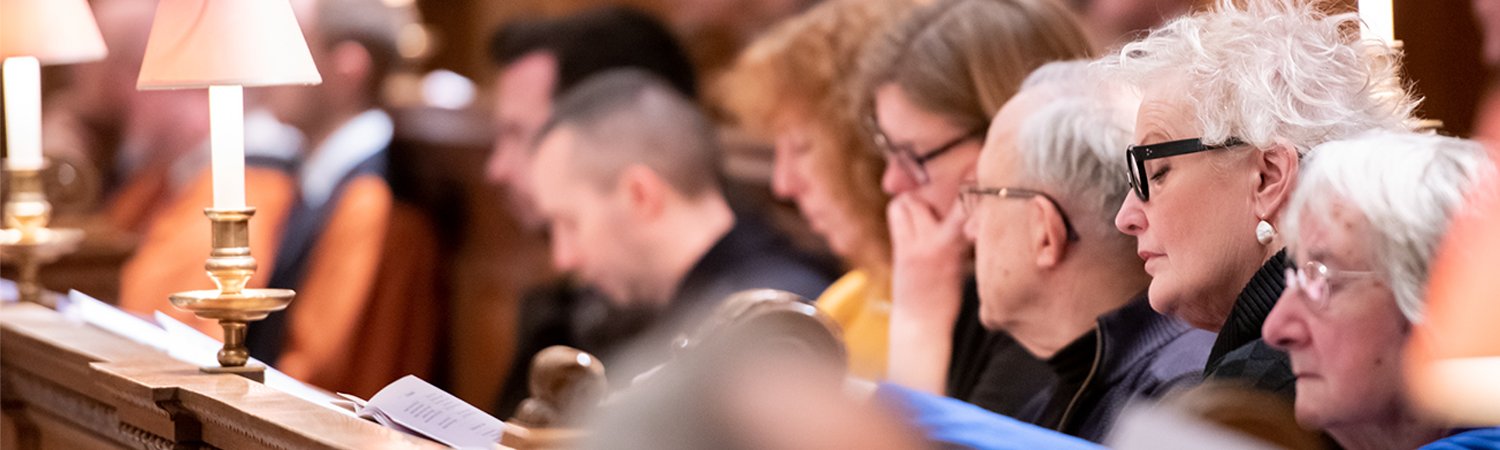
On Tuesday 11th November, 2025, at 6:30pm a service was held at St Bride’s Church, Fleet Street to commemorate all those in the media industry whose mission to bring us the news faces peril and uncertainty and sometimes, tragically, demands the ultimate price.
Introduction
As consumers of news in a fast-changing world, we demand a great deal of our journalists, correspondents, photographers, sound-crew and camera-crew. We expect them to keep us informed and enlightened about difficult and complex situations in the trouble spots of the world, often at great personal risk, and sometimes, tragically, they pay the ultimate price.
So it is important that, as representatives of the media industry, we honour their memory in this service and remind ourselves of the sacrifice they make in order to bring us the truth.
We commemorate and support, too, the support staff – drivers, translators, fixers – who make it possible for them to carry out their work.
But we also come together in this spiritual home of the media – local, regional, national and international – to celebrate the industry, its people and its achievements.
The Revd Canon Dr Alison Joyce introduced the service:
A very warm welcome to St Bride’s, to what is always one of the most significant events of our calendar, and never more so than at the present time.
The numbers of journalists killed, injured, imprisoned, or taken hostage, during the course of their work, increases every year – in an era in which disinformation, and the manipulation of the truth, are also becoming chillingly normalised.
We have never been in greater need of freedom of the press. And by the same token, we need journalists; we need good journalists; and we need to support good journalism.
As the Journalists’ Church we have never been more proud of our association with your profession; never more convinced of the profound importance of what you do; never more impressed by the courage and dedication of those who cover stories at such immense personal risk; and never more powerfully affected by the appalling loss of life that we shall be marking this evening. In the centre of your orders of service you will see photos of just some of those we are commemorating, and it is heartbreaking.
At this service, we not only remember those members of the profession who have lost their lives during the course of their work, many of them in conflict zones: we also honour the memories of those who have died old and full of years, whose contribution we rightly celebrate as well.
At this service we remember them all: writers, reporters – including those who work freelance – broadcasters, photographers, camera-and sound-crew, and their support staff. And also those who are currently in prison or held captive. None of them are forgotten.
At St Bride’s we are here for you all, regardless of your own faith tradition – including those of you who have no faith at all. We hold you in our hearts, and we keep you in our prayers.
Our particular thanks to those who will be reading for us this evening – and a very special welcome to our speaker James Waterhouse. It is an immense delight to have you with us.
Let us pray:
Almighty Father,
in whose perfect realm
no sword is drawn but the sword of justice,
and no strength known but the strength of love:
guide and protect all who seek to bear witness
to the truth of your troubled world;
all who seek to give a voice to the voiceless,
and to tell stories that would otherwise remain untold.
We remember especially this night all members of this profession
who have died, or whose fate is unknown.
That you may bless their work,
and strengthen and sustain those who love them.
In Jesus’ name we pray. Amen.
Addresses
James Waterhouse, Ukraine Correspondent, BBC News
News organisations big and small are built on extraordinary people. Individuals who do extraordinary things to reach the truth.
Since I moved to Ukraine on an icy January day in 2022, I have witnessed this first hand at the BBC. This was a country which, six weeks after my arrival, would be engulfed by an invasion from its bigger neighbour. Before that point, Ukrainian colleagues patiently helped me through the steep learning curve that a new posting provides. I was another correspondent trying to get to grips with a country on the receiving end of what was then eight years of Russian aggression since the capturing of Crimea and the outbreak of fighting in the east.
What my colleagues didn’t ask for, was to be measured up for Kevlar protective vests and helmets “in case”, or to discuss evacuation options. They didn’t want to have to ponder what 150 thousand Russian troops really were up to along the border. And yet, they still turned up for work, were generous with their expertise, and somehow, put their anxieties, anger, whatever understandable emotions they were feeling, to one side – they took themselves out of the story – allowing us as to try and report objectively, impartially, and free of bias.
My teammates kept encouraging me to explore their city, to check out Chernobyl, but we spent what little time we had off recovering. The Russians would get to Chernobyl before I could, disturbing some radioactive soil in the process as they dug trenches. Friends wanted to come out and visit. A few weeks later my phone lit up with their cancelled diary invites.
Some journalists in Ukraine had war experience from covering the grinding front lines of the Donbas region, but most did not, and like me, had no idea what to expect.
Before the 24 February in 2022, I knew what “war” meant, but not how it felt. Now, the term “full-scale” on its own feels like an impotent label. Because in practice, in this context, it is the seeping of fear and anger into every crevice of life.
But on that first morning of the invasion, I saw it in the form of long lines: never-ending columns of Russian armour approaching Kyiv from the north, picked up by satellite imagery. Queues of people outside pharmacies, anxiously trying to get vital prescriptions before the city was surrounded. Lines at cashpoints, as locals tried to withdraw what they could before fleeing westwards. There were rows of abandoned cars outside Kyiv’s main train station as the exodus took hold. The queue of all, was outside a police station, where people showed their passports in exchange a yellow armband and automatic rifle. “Anyone who wants a weapon will get one,” said the President at the time.
It was – and still is – Europe’s biggest war since 1945. After spending years as an editorial backwater, the world’s eyes were suddenly on Ukraine and what awaited it.
What we didn’t know, was whether the Russians would indeed be in the capital “within days” as some predicted, what they would do with us, whether the Ukrainians would fight back, or how long we could survive if Russians forces laid siege to Kyiv and bombarded it, as they have done countless times.
The weight of the unknowns felt heavy, and I was just an outsider. I didn’t have to worry about loved ones now living under occupation or on a front line. I didn’t have relatives from across the border suddenly falling silent in family WhatsApp groups, refusing to acknowledge what was happening.
I stand here today feeling very lucky. I was surrounded by a team with the knowledge, experience and resources to allow us to make a balanced decision on whether to stay or go. Remaining allowed us to both tell and invest in the story of Ukraine’s suffering and survival. It was local staff who provided the foundations for the BBC operation to be set up from a hotel room in Kyiv, from where we have provided a public service since.
I am also fortunate, because there are 138 other journalists, who also stayed to cover Russia’s invasion, who didn’t make it home, with the highly regarded Ukrainian documentary photographer Kostiantyn Huzenko being the latest, he was killed on the eastern battlefields as he defended his country. He was 28.
In fact, around 100 of the journalists who’ve died were Ukrainians fighting on the front lines. Kostiantyn’s open coffin was displayed in Kyiv’s Independence Square, the stage for two revolutions. An imposing granite statue of an unnamed woman holding a rose branch looks over the city. She was built to celebrate the country’s independence since the collapse of the Soviet Union. Today she also represents its resilience as Moscow tries to drag it closer once more. Across Kyiv there are endless reminders of the price of freedom. The hum of city life is routinely interrupted by air raid sirens or a brass band playing the national anthem at a military funeral.
Unlike my male Ukrainian counterparts, I can leave Ukraine. I don’t have to fight or live in fear of being forced to. We all have our own journalistic callings, but when it’s your country in the balance, the luxuries of rest, tuning out, variation, spending quality time with your family – don’t exist. The risk-benefit equation that we all must balance when pursuing a story is made all the more lopsided when it is existential.
What complicates matters further, is how the war has changed, as well as the world surrounding it.
Before audience interest would spike with the liberations of cities like Kherson, or the fall of towns like Bakhmut. We had Ukrainian counter offensives, the destruction of a major dam, but now viewers and listeners are demonstrably fatigued, even avoidant. And events are not always easy to follow.
The evolution of drone warfare has made the risks on the ground greater than ever. These insidious weapons, packed with explosives, now rule the skies. They’re controlled by skilled pilots and are now immune to most defences.
It didn’t stop Olena Hubanova and her cameraman Yevhen Karmazin from recently travelling to the remaining part of the Donetsk oblast still under Ukrainian control.
Her state-funded channel Freedom said she was committed to “telling the world the truth about how the Russians are destroying her native region.”
They were both driving through Kramatorsk, around 12 miles from the front line. A city come military hub we’ve visited countless times but is now only reachable by roads covered by anti-drone netting. In this part of Ukraine, the sirens often come after the explosions.
Olena and Yevhen’s car was struck by a Russian FPV drone, killing them both. The sight of their imploded vehicle left room for little hope. It was impossible to not be moved by the image of their adjacent open caskets under the golden domes of Kyiv’s St Michael’s cathedral. The grief etched on the faces of their relatives remind us of the price Ukrainians continue to pay.
Russian forces continue to inch their way into the Ukrainian cities of Pokrovsk and Kupiansk. The war’s current path means more towns will be gradually captured or destroyed. Olena and Yevhen’s reporting helped remind the world of that.
I look up to many of my contemporaries and the certain type of bravery it takes to travel to warzone after warzone. However, it is a laudable one to head into your first war, with no experience, when it is your own country.
Humanity’s repeated descents into the hellscape of conflict bring the same uncomfortable risks journalists must grapple with to reach the story. As an industry we continually balance real dangers with finding something meaningful to say.
I read previous addresses by esteemed colleagues from this lectern over the past fifteen years. You notice enduring themes – like the impact of witnessing of atrocities, the resilience of people encountered, western intervention in wars – or the perceived lack of it, and the personal cost that comes with doing this job.
I was also struck by how some things have also changed. The proliferation of misinformation on social media is growing more sophisticated, in a space where regulation is only receding. The political pressure on the endeavour of impartiality has never been greater, and there has been a gradual erosion of nuance in debate. Trying to win the audience’s trust is even more challenging with these headwinds, but we must persevere. We must continue to adapt and learn.
Before her death, Marie Colvin said here in 2010 that, at that point, it was never more dangerous to be a war correspondent.
Unfortunately, things have only worsened. According to the Committee to Protect Journalists, 2024 was the deadliest on record, with at least 124 journalists and media workers losing their lives. Two thirds of them were Palestinian. This year the figure will be higher.
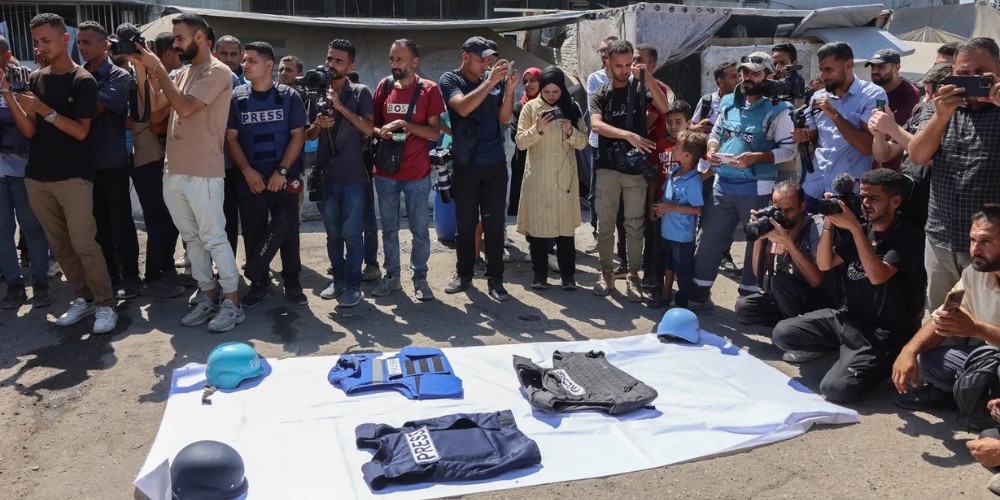
It’s not just the numbers that paint an increasingly sinister picture, previous addresses have over those 15 years also reinforced what we know today: that truth, and the journalists who seek it, are coming under increased attack. The blue press vests and helmets that were once supposed to remind combatants of the international laws that protect us, are now more commonly seen at memorials.
The French photojournalist Antoni Lallican often wore his – you can see his image in tonight’s order of service – he became the first journalist to be killed by a drone in Ukraine last month. Antoni arrived a month after I did and went on to win the prestigious Victor Hugo Prize for photography in 2024 for his work.
Russia’s invasion now, of course, isn’t the only major conflict, with the wars in Sudan and the Middle East to name two others. I watched the horrors of October 7 in Israel along with Ukrainians, they knew the world’s focus would shift elsewhere, rightfully so, you might argue.
I look at the horrifying death toll of Palestinian journalists in Gaza, at currently more than 200 this year, and I admit, I have a better understanding as to why they continue to run towards the danger and shine a light on what’s happening there.
They don’t see it as a choice, like I do.
Major news networks, including the BBC, but more importantly the world, have benefitted hugely from their skill and bravery. We will never be able to repay them fully.
Wars and the suffering they cause don’t change, only the extent to which the world watches. It is us journalists who continually try to influence this, by striving to see events for ourselves. We place trust in colleagues and rely on local expertise. Seeking distinctive stories with significance is never-cost free, which is what brings us here to St Bride’s.
These are turbulent times for our industry, but they shouldn’t ever overshadow the sacrifices of colleagues who continue to report from conflicts, especially those on their home soil.
Tonight, I think of those who ran towards war, with little experience, because they felt they had no choice. We hope, and for those inclined, pray, that they continue to make it home safely. And may we honour those who have not.
Readings
Robert Hardman, Daily Mail columnist and royal biographer read Wisdom 1: 1-5, 7-8
Love righteousness, you rulers of the earth, think of the Lord in goodness and seek him with sincerity of heart; because he is found by those who do not put him to the test, and manifests himself to those who do not distrust him.
For perverse thoughts separate people from God, and when his power is tested, it exposes the foolish; because wisdom will not enter a deceitful soul, or dwell in a body enslaved to sin.
For a holy and disciplined spirit will flee from deceit, and will leave foolish thoughts behind, and will be ashamed at the approach of unrighteousness.
Because the spirit of the Lord has filled the world, and that which holds all things together knows what is said, therefore those who utter unrighteous things will not escape notice, and justice, when it punishes, will not pass them by.
Fiona O’Brien, UK Director, Reporters Without Borders, read Do or die: In the words of Pyae, an exiled journalist from Myanmar
In the four years since the military coup in Myanmar, the junta has responded with extraordinary violence. And to cover up its human rights violations, it has tried to turn Myanmar into an information black hole by hunting down journalists. Many have been killed, detained or tortured.
Pyae is a video journalist who covered the conflict for outlets including Reuters and AFP, and is now in exile in Thailand. Earlier this year, he told RSF about his persecution in Myanmar. These are his words.
I knew I could be arrested or tortured and killed, or killed on the spot. I had prepared myself for this. I had only two options: do or die.
Their main goal is to stop the flow of news. They used to say that reporters are inciting the people. Reporters are making everything worse. That’s why they hate us. They hate us so much that even when we were in prison, I had to tell everyone I was just a political prisoner. If they know someone is a reporter, that person will get extra beatings.
The hardest time for me was the 10 to 15 minutes before the protest started. I felt so unsafe and anxious. We had to go there early to check out the surroundings. We had to find the security cameras, to be aware of the informers. We had to think about what to do if we got caught. It was so stressful.
When I was arrested, I was sent to the interrogation centre. Those 15 days in the centre were the most difficult time of my life. At first, the police didn’t know there were reporters among us. They just arrested us all. But later they obtained information that there were two reporters among us, so they tried to figure out who we were. At first we kept denying it. But later, some of the protesters were interrogated and had to speak out. Then, they warned us that if information about conditions inside the prison got out, they would blame the reporters and beat us.
At first, we tried to deny everything, but later we had to confess to something. They would keep torturing us until we confessed to something. So finally, we were charged under Section 505(a). We were given jail sentences after a trial that went on for six months. We were sentenced to three years in prison.
Since the coup I have felt only one thing: that I had to take a stand against them. No matter what happened, we would side with justice, because we were doing the right thing. That determination motivated us to keep going. We might have lost some battles, we can’t know how long it will take, but we do know that we will win.
Caroline Gammell, Chief Foreign Reporter (Digital), The Sun read an excerpt from Rebel women between the wars by Sarah Lonsdale
An inky night in civil war Málaga, 19 February 1937. General Franco’s nationalist troops had taken the town days earlier. Political prisoners filled the jails; posters of Mussolini, Franco and Hitler, the “strong men” of fascist Europe, plastered the walls, and hit squads were executing republican sympathisers.
Into this maelstrom tripped a 23-year-old Englishwoman wearing a floral print dress. Her mission: to connect with the American consul and find the famous writer Arthur Koestler, who had been taken by Franco’s men. She was also secretly recording Italian troop movements to show how Italy had breached international neutrality agreements.
Discovery would mean certain imprisonment or worse.
What prompted this young woman to face dangers in the dark streets of Málaga? And why, finding the imposing entrance of the American consulate locked for the night, did she climb over the garden wall and present herself to the surprised consul who, remembering his manners, invited her to dinner?
Shiela Grant Duff’s father had been killed in the first world war, and she was convinced that as a foreign correspondent reporting the rise of fascism across Europe, she could persuade the world that Hitler must be stopped. But she was denied the newspaper support structures afforded men. When she approached the Times for a job, the editor Geoffrey Dawson told her foreign correspondence was no job for a woman. Spurned and freelance, Grant Duff took off alone. Her journey into Spain, via north Africa and across the Mediterranean into Gibraltar, was inspired by her desire to prove she was every bit as brave and capable as a man.
She had already seen at first-hand how untrammelled nationalism could turn ordinary, God-fearing people into supporters of brutality. In January 1935, on a freelance commission for the Observer, she had travelled to Saarbrucken, then a League of Nations protectorate, to cover the Saar plebiscite. The Saar region, 730 square miles of coal-rich hills abutting Luxembourg, had been confiscated from Germany at the Versailles peace negotiations. The plebiscite over the Saar’s return to German control in January 1935 was marked by extreme German brutality, forcing Jews, communists and anti-fascists to flee to France.
The coverage in the British press was characterised by relief that the whole thing was over, that Hitler, having got back the Saar, would pipe down. Grant Duff, independent of the diplomatic press corps, stayed on in Saarbrucken and watched. She wrote in the Observer: “The million swastikas which hang on the walls in the Saar give the impression that a plague of spiders has descended …The Nazis can tell their enemies by their eyes. Panic can be seen in all the gestures and bearing of working-class women who tell how they have been threatened, how they have been mocked and spat upon … Others … tell how their doors have been broken open in the middle of the night.”
It would be so easy for the legacy of Grant Duff and her contemporaries to be lost and forgotten; it is our duty to ensure that they are not.
Music
The St Bride’s Choir and the organist of St Bride’s performed the following anthems and songs:
Psalm 121 – Walford Davies
The peacemakers – Sasha Johnson Manning
Fire and rain – James Raylor, arr. Matthew Morley
Eternal light – Edmund Jolliffe
Elegy – George Thalben-Ball
Hymns:
My song is love unknown
The Lord’s my shepherd
Ye holy angels bright